Jabłkowski Tenement House – Its History and 3D Mural: A Warsaw Treasure Trove of Surprises
On a sun-drenched Saturday in July, the Jabłkowski Tenement House opened up like a magical treasure trove, revealing a wealth of surprises I hadn’t expected at all. And all because I tend to steer clear of social media – I don’t even have accounts on most platforms – so many places that have already made the rounds online and become quite well known remain undiscovered by me. This means I can still enjoy that special pleasure of stumbling upon something extraordinary entirely by chance. That’s exactly how I found myself inside the tenement house at 21 Chmielna Street. All it took was one thought: ‘What a fantastic job they’ve done restoring this place!’ – and moments later, I was peering into its hidden world.
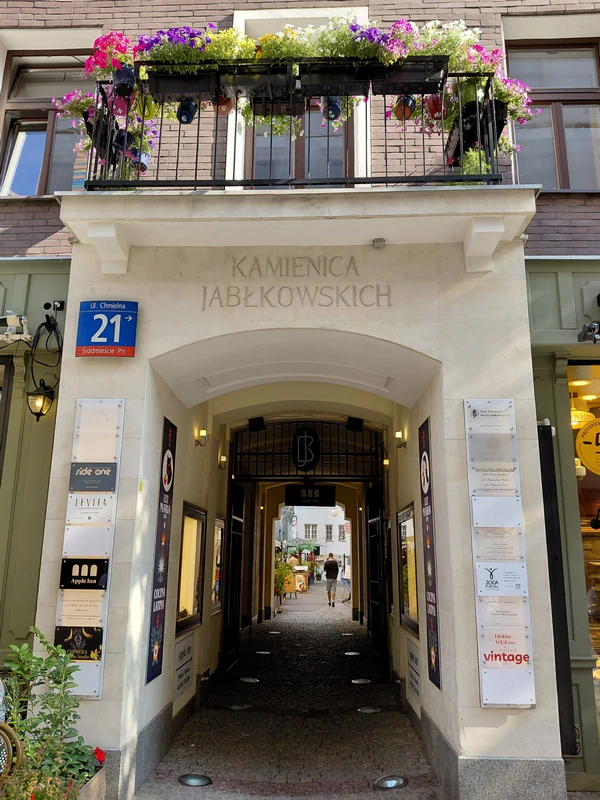
It was the façade that caught my eye, particularly the balcony overflowing with flowers. Above the gateway, I noticed the restored, carved inscription KAMIENICA JABŁKOWSKICH. As I stepped through, I found myself in a world where history mingles with the present and reality with fantasy.
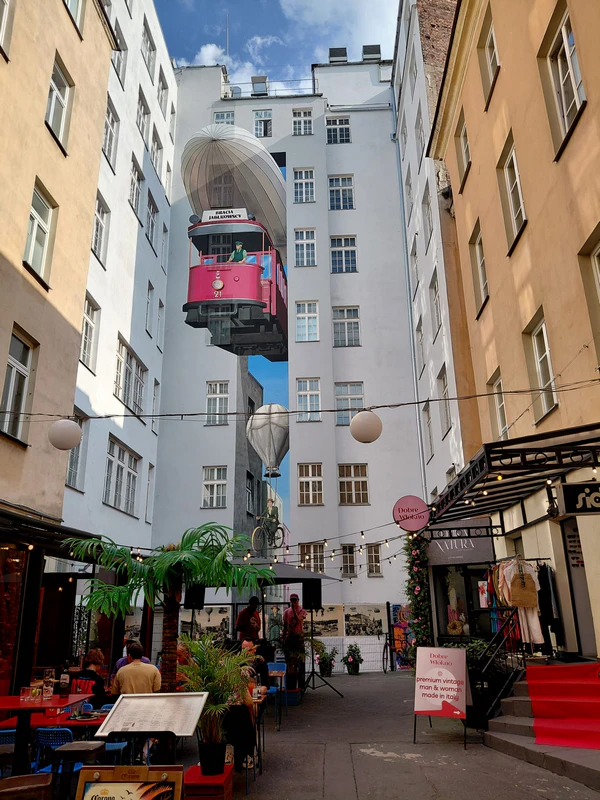
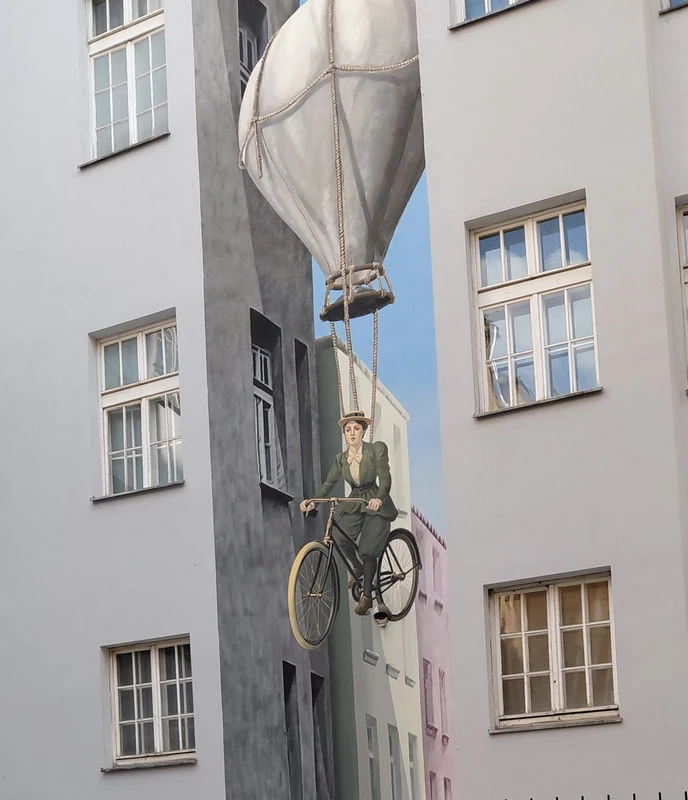
The first thing I saw in the courtyard was… a flying tram hovering above some artificial palm trees! More precisely, a red tram bearing an advertising slogan appeared to be emerging straight out of the wall, ready to soar over the rooftops of Warsaw. Then I spotted a majestic airship floating above it, and beneath that, a balloon with a lady on a bicycle suspended below. These fantastical visions immediately reminded me of illustrations from Jules Verne’s novels. The inspiration for this 3D mural, designed by architect Piotr Glegoła and brought to life by Good Looking Studio, came from early 20th-century postcards depicting futuristic dreams of Warsaw. I must admit, it’s hard not to be taken in by the optical illusion it creates. I caught myself trying, with growing fascination, to work out where the illusion ended and the architecture began. I loved this blending of fantasy with Warsaw’s everyday reality. I’ve always adored airships and balloons, so seeing them here was a particular delight. Gazing at this colourful vision and soaking up the atmosphere, I felt like a tourist in my own hometown.
Intrigued, I decided to delve into the building’s history. And here another surprise awaited me, because before the tenement house was built at 21 Chmielna Street, the site was home to… a wooden amphitheatre.
Built in the 1770s at the corner of Chmielna and Bracka Streets, it was known to Warsaw’s inhabitants as Szczwalnia or Heca. Historical descriptions suggest it was a circular, multi-level structure with an open arena surrounded by three tiers of seating. The spectacles held here would hardly be considered entertainment today: dogs were set upon bears, and animal fights were staged. That, in fact, is where the name Szczwalnia came from. In time, the venue also hosted circus and equestrian shows, along with performances by acrobats, entertainers and trick riders.
The building was demolished in 1852, and between 1877 and 1878, Izaak Romberg built a four-storey tenement house on the site, with rear wings surrounding an inner courtyard. After the First World War, the property was acquired by the Jabłkowski family, owners of the famous department store on Bracka Street. They intended to expand their retail empire by incorporating the Chmielna property, but their ambitious plans never came to fruition. The tenement house survived the Second World War, although not without damage – one of its rear wings was destroyed. Today, lovingly restored, it is once again full of life, albeit of a very different kind from the days of Warsaw’s old merchant families. Inside, there’s a rather interesting world of boutiques where original ideas and individual style take precedence over mass-produced fashion.
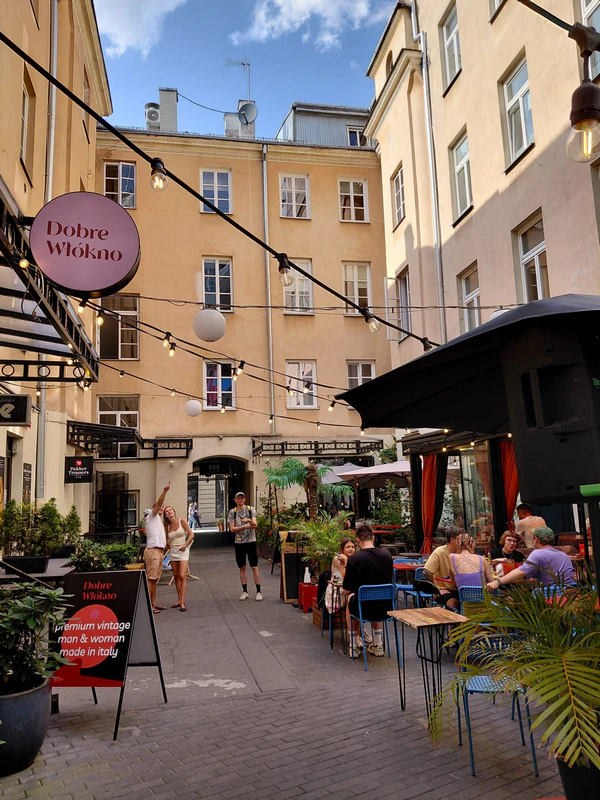
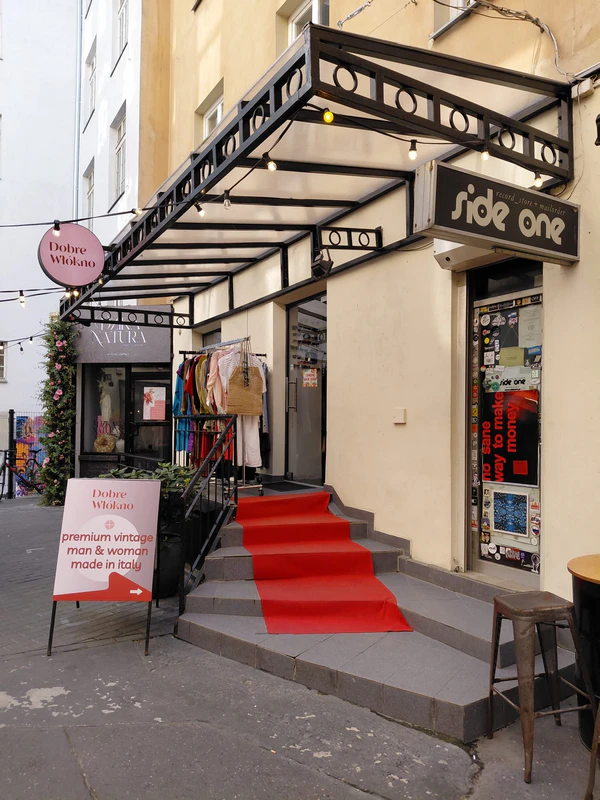
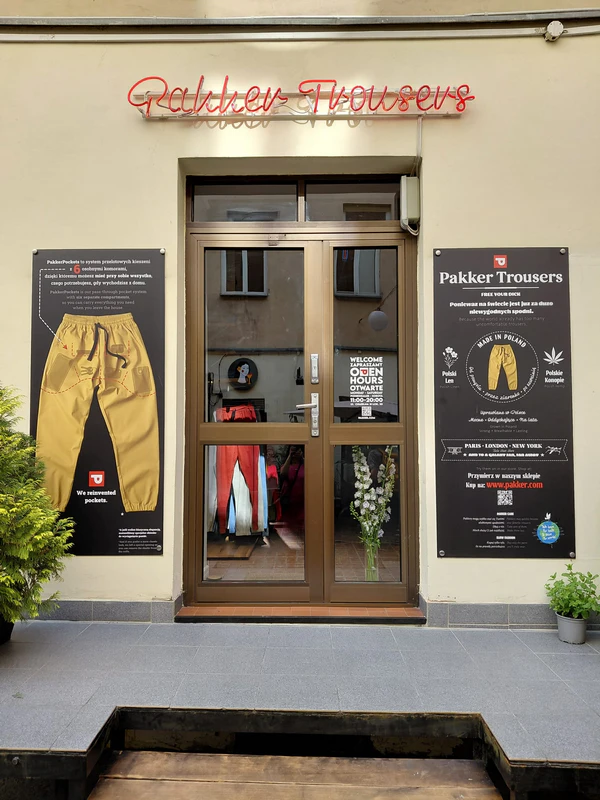
Pakker Trousers, a Polish brand specialising in relaxed, unconventional trouser designs, has its official shop here. Its trousers are made from materials including linen, cotton, corduroy and even hemp, and are distinguished by a unique pocket system. The small, independent Dobre Włókno boutique sells clothing that combines original designs with vintage fashion, while MUSS Vintage Shop tempts visitors with the prospect of unearthing second-hand fashion gems. Beyond clothing, there’s also Side One, a record shop with an extensive selection of vinyl records, and Dzika Natura, a florist’s.
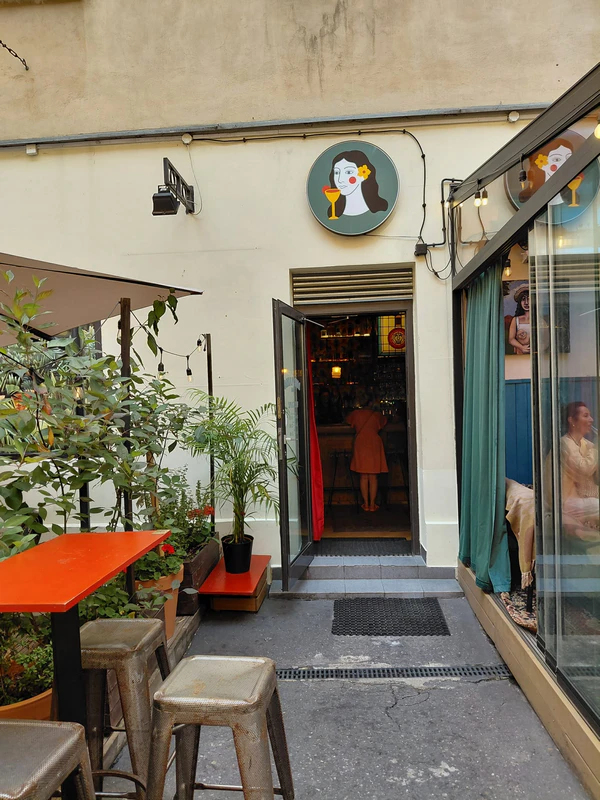
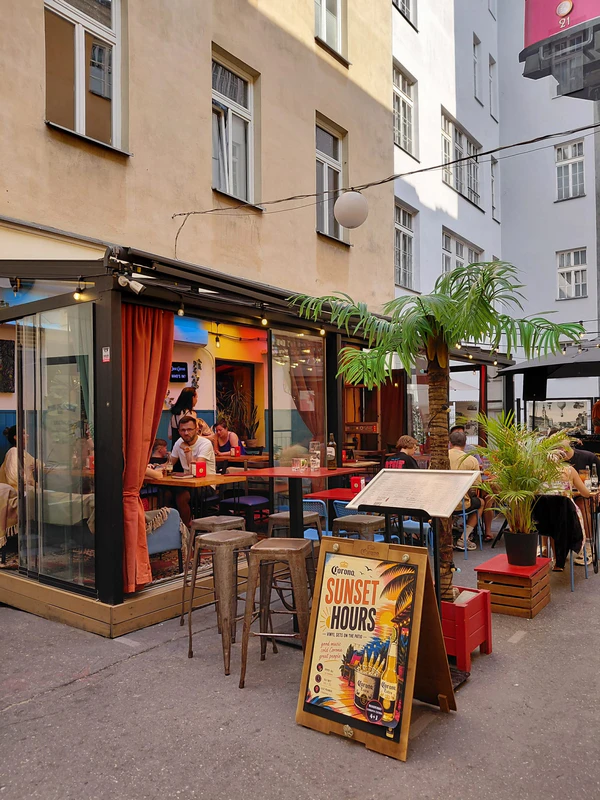
No one who ventures into this treasure trove need go hungry or thirsty. There are several appealing places to eat and drink here and in the surrounding area, each with its own character, so depending on your tastes, you can embark on a culinary journey to different corners of the world. I was particularly taken with the colourful, palm-filled outdoor seating area at Luz Maria Bar, which serves Latin American cuisine. Nearby, Vincent, a bakery and café, beckons with French pastries and coffee. Both places were bustling with customers. I didn’t try either of them, though, so I can’t recommend them or advise against them.
I met plenty of visitors here. It turned out that several were staying at the cosy Apple Inn, which offers rooms in the attic and on the upper floors. And so, without ever leaving the capital, I happened upon a place that made me feel like a proper tourist enjoying a well-deserved holiday. What a wonderful feeling!
July 2026