Giżycko: A Town That Lives to the Rhythm of the Lakes
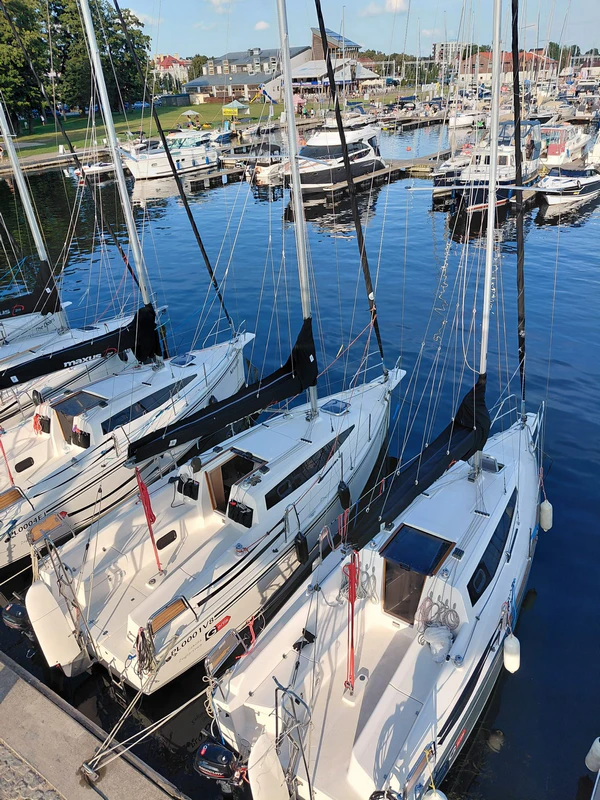
In the August sunshine, Giżycko struck me as a town where I could happily stay a little longer. Unlike on the Polish coast, I didn’t feel overwhelmed by crowds or the endless tacky attractions that have come to dominate Władysławowo and the surrounding area. Although Giżycko is one of the larger towns in Masuria, I found it pleasantly laid-back. At its heart, of course, lies Lake Niegocin. Most of the town’s main attractions are clustered around it – the beach, the Ferris wheel, the passenger harbour and the pier. There are plenty of tourists strolling along the waterfront, sunbathing or sitting in cafés and restaurants. Yet it is the sailors, marinas and sailing boats that give the town its distinctive, colourful character. Little wonder, then, that in 2012 Giżycko was voted Poland’s Sailing Capital in a poll organised by the sailing magazine Wiatr, beating Gdynia, Puck and Mikołajki, among others.
I set off to explore the town with a friend, without a plan or a map. I decided to trust my instincts. I wanted to get a feel for the place and find my bearings, rather than tick off every attraction. I was more interested in seeing what life was like here, wandering through the streets, exploring some of the less obvious corners and finding out whether Giżycko really deserved its popularity among sailors and tourists. I had only one long, sunny afternoon to explore. So we started at a place that largely dictates the rhythm of life in the town and surrounding villages – the swing bridge over the Łuczański Canal.
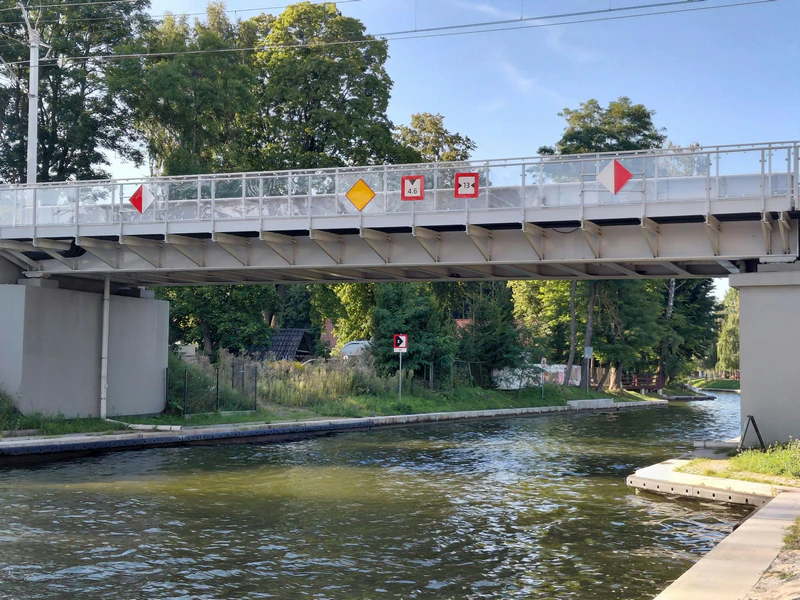
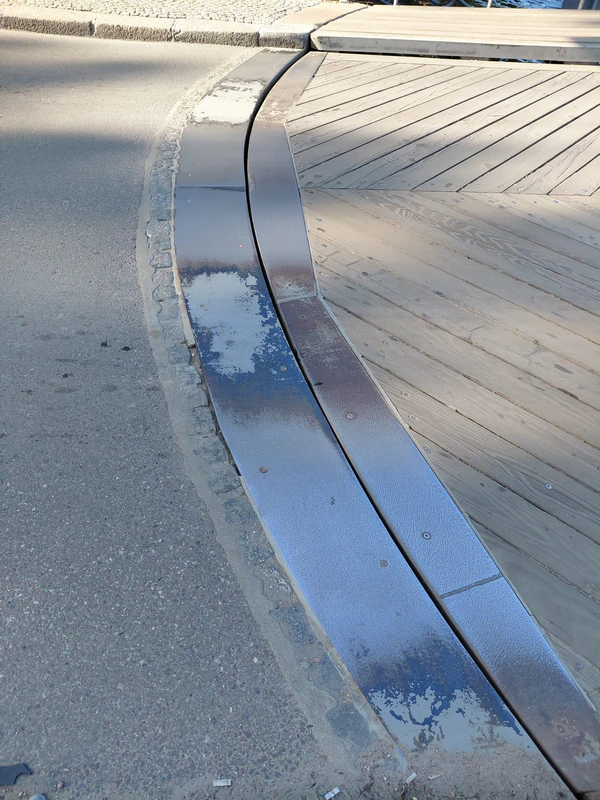
The swing bridge was built in the late 19th century by Beuchelt & Co., a company based in Zielona Góra. It provided a crossing between the town and the area occupied by Boyen Fortress. The structure weighs almost 100 tonnes and is approximately 20 metres long and 8 metres wide. It is one of those attractions that don’t look particularly spectacular at first glance. Just an unassuming bridge connecting the two banks of a canal. And yet there is something about it that draws tourists and makes them linger. I found myself studying it with interest, too. It is one of the few bridges of its kind in Europe still operated entirely by hand. Remarkably, it takes just one person to operate this nearly 100-tonne structure. When the bridge opens, its span swings sideways, allowing sailing boats and other vessels to pass through the canal. Apparently, the whole manoeuvre takes only a few minutes and is quite a spectacle for onlookers, who watch with fascination as a section of the road slowly swings away from the bank. When the bridge opens, road traffic and pedestrians come to a standstill, giving way to the sailors. The more I think about it, the more typically Masurian it seems. Here in Giżycko, it is not cars but boats – sailing boats and motorboats – that appear to dictate the pace of everyday life at the height of the season. And I think that says a great deal about a town where waterways are just as important as streets and roads. Unfortunately, we didn’t have enough time to watch the bridge opening for ourselves.
Boyen Fortress, another of Giżycko’s attractions, is only a short distance from the swing bridge. It is a world away from the bustling shores of Lake Niegocin. Hidden among the trees, this 19th-century fortification is a reminder of a time when Masuria was not yet a tourist region famous for its lakes, but an area of considerable strategic importance. The fortress was built between 1844 and 1856 at the instigation of the Prussian military authorities. One of its main advocates was the Prussian Minister of War, General Hermann von Boyen, after whom it was named. Its distinctive star-shaped layout is best appreciated from above. At ground level, it is the imposing brick walls, gateways, bastions and grass-covered defensive ramparts that attract attention. That, at least, is what I know about the place from descriptions I’ve read. On this occasion, however, we decided to give the visit a miss.
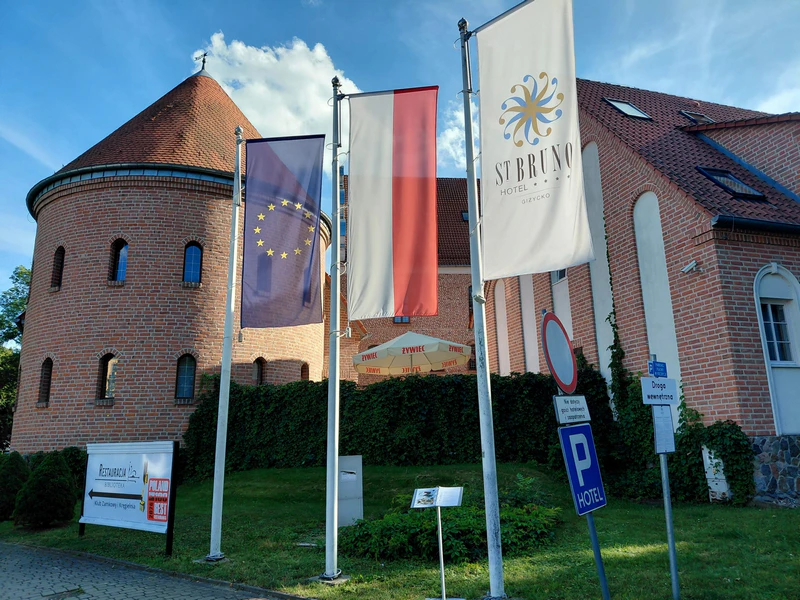
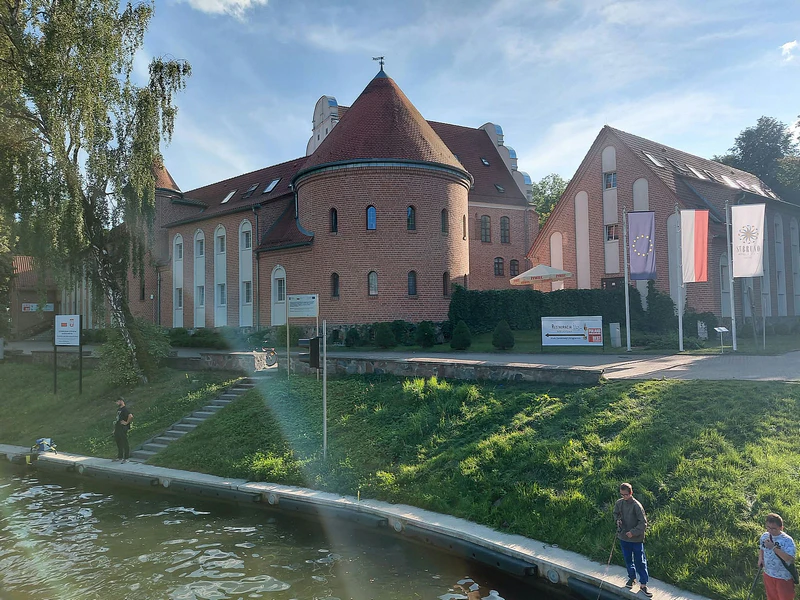
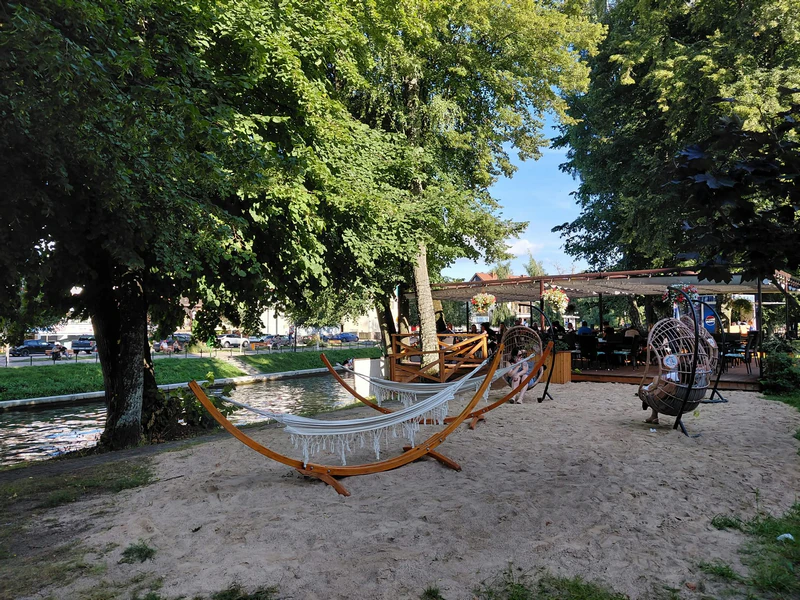
Right beside the swing bridge, on the Łuczański Canal, stands another building that recalls the region’s rich and complicated history. This is the former Teutonic castle, whose origins date back to the 14th century. Built by the Teutonic Order on the narrow strip of land between Lakes Niegocin and Kisajno, it once served both defensive and administrative purposes. Over the following centuries, it was repeatedly rebuilt, changed owners and uses, and gradually lost its original character. Only one historic wing of the former stronghold has survived. Following restoration and extension, it became part of the St. Bruno Hotel. The hotel buildings combine historic walls with contemporary architecture, so there is little of the austere atmosphere usually associated with Teutonic castles. Nevertheless, the complex looks interesting, particularly from the canal. It is also a good example of how a historic building can be restored and given a new lease of life. I particularly liked the hammocks and small children’s playground beside the hotel, as well as the waterside bar associated with it. I enjoy places like this, where you can simply sit down, relax and watch the world around you, without feeling the need to do anything in particular. The whole complex struck me as well maintained, yet free from the excessive pretension that can rob similar places of their natural charm.
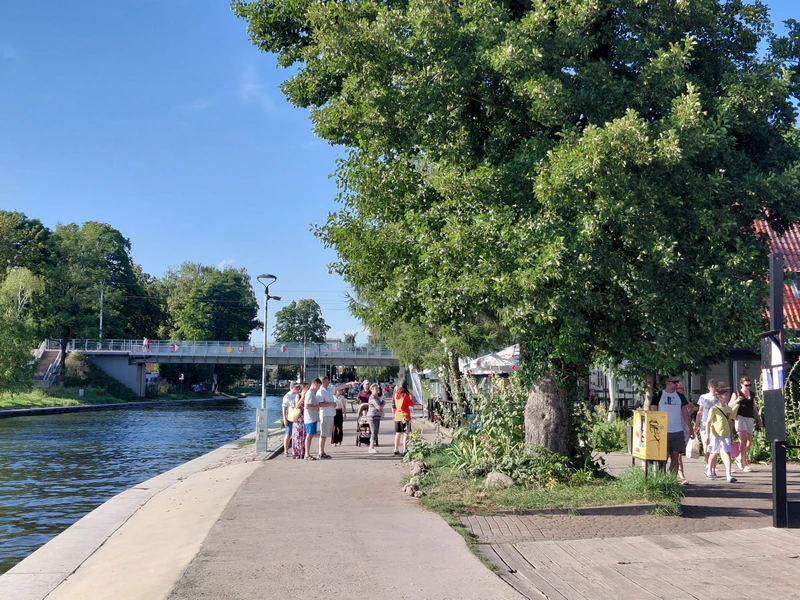
The Łuczański Canal itself, also known as the Giżycko Canal, is much more than a picturesque feature of the townscape. Just over two kilometres long, this waterway connects Lakes Niegocin and Kisajno and forms an important part of the Great Masurian Lakes system. During the summer season, there is almost constant activity on the water. Sailing boats, motorboats and larger tourist vessels make their way along the canal, while tourists walking beside it often stop to watch their manoeuvres. Things become particularly interesting near the swing bridge, where boat traffic is governed by the bridge’s opening times. Sometimes a proper traffic jam develops, except that instead of cars, it consists of boats whose crews patiently wait for their chance to continue their journeys. Walking along the canal reveals a rather different side of Giżycko from the one around the town beach. Instead of sweeping views across Lake Niegocin, there is a more intimate atmosphere and a distinct harbour feel. Boats moored along the banks or waiting to pass through, buildings reflected in the water and sailing boats moving lazily along the canal create a scene I could watch endlessly. I particularly enjoyed the contrast between the calm, almost motionless surface of the water and the sudden bursts of activity whenever another boat passed through.
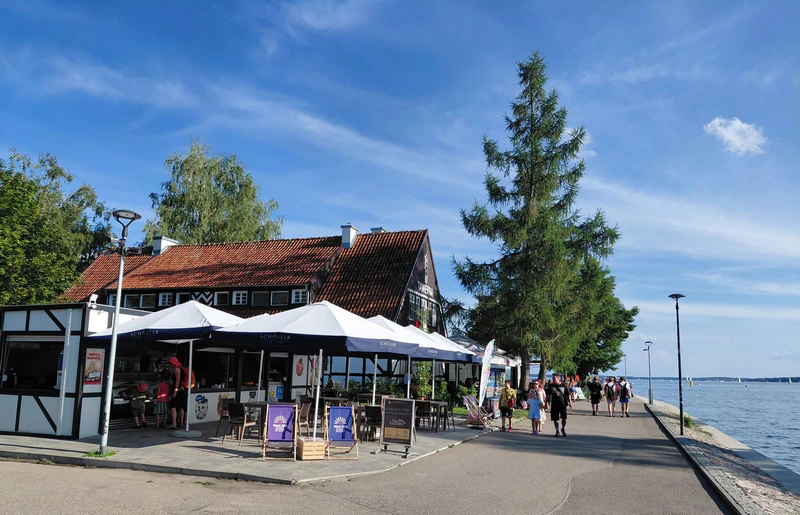
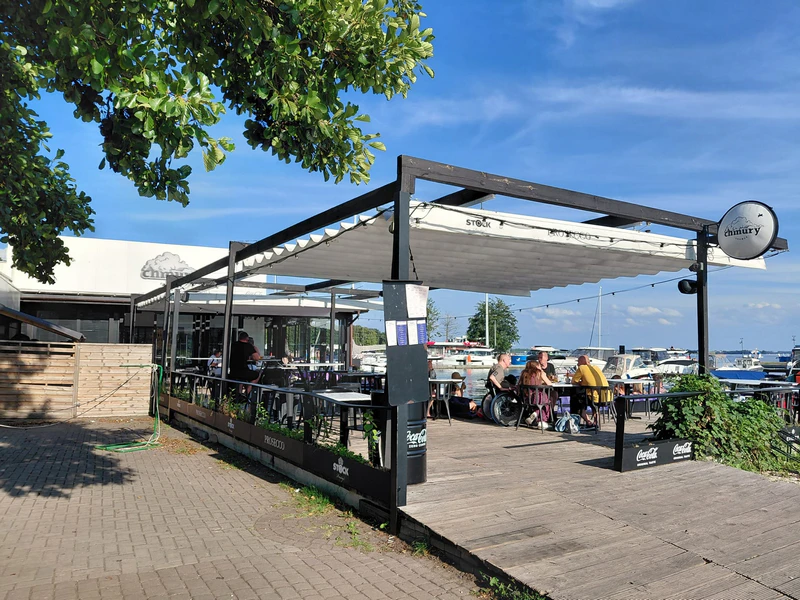
Nadbrzeżna Street, which runs alongside the canal, is a busy promenade leading straight to Lake Niegocin. There are plenty of cafés and restaurants overlooking the water. You can sit at a table and watch the passing boats, which strikes me as a thoroughly pleasant way to spend some time. Had I not been so pressed for time, I would probably have stayed here much longer.
To my mind, sooner or later every walk through Giżycko leads to Lake Niegocin. This is where the town’s summer life is concentrated, around the beach, pier and harbour. There are cafés and restaurants, leafy picnic areas and lawns where I noticed people practising yoga. I liked that scene. All around them were walkers, sunbathers and the usual bustle of a summer resort, yet they carried on with their exercises quite peacefully. It is little scenes like this that give the town its unique atmosphere.
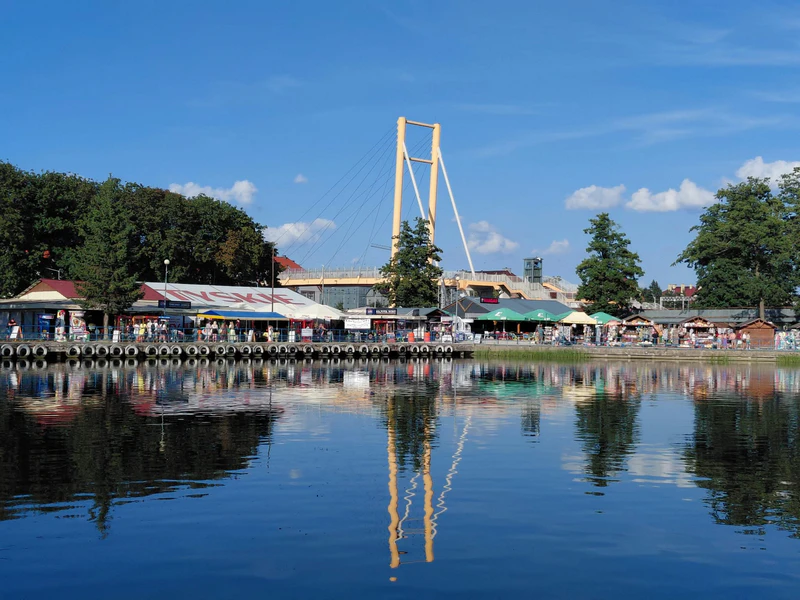
The beach, although small, is an ideal place to sit back and watch the sailing boats moving across the lake in the distance. It is a lovely sight. There are also attractions nearby for children and adults alike. What particularly stayed in my mind was the white Ferris wheel, turning steadily against the blue sky. In summer, this part of town is lively and crowded, but you only need to move a little way from the busiest stretches of waterfront to find a quieter corner and enjoy the lake views. A large GIŻYCKO sign stands beside the town beach, with someone almost constantly posing for a photograph in front of it. My attention was also drawn to an unfinished building near the beach, rather extravagant in its design. Unfortunately, it spoils the view. To my mind, it looks completely out of place, and I find it rather sad to see. It ought to serve as a warning to anyone tempted to interfere with Masuria’s idyllic landscape.
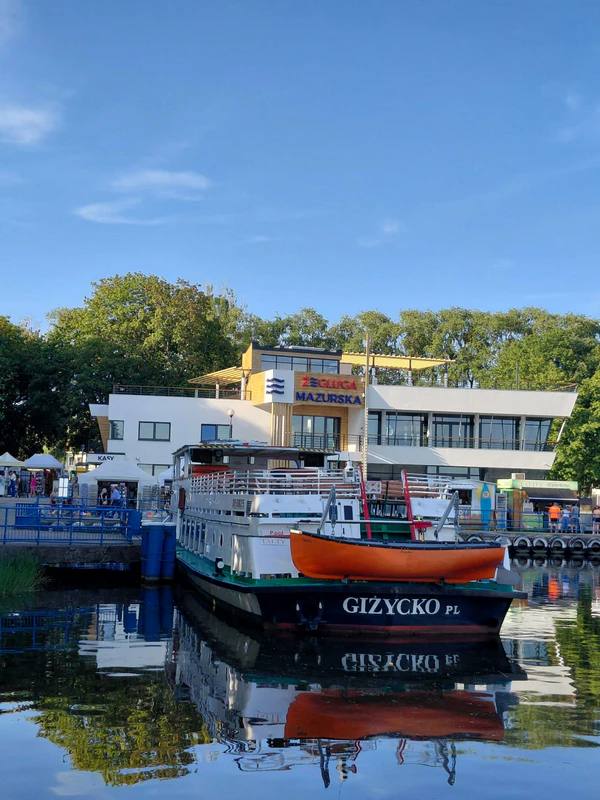
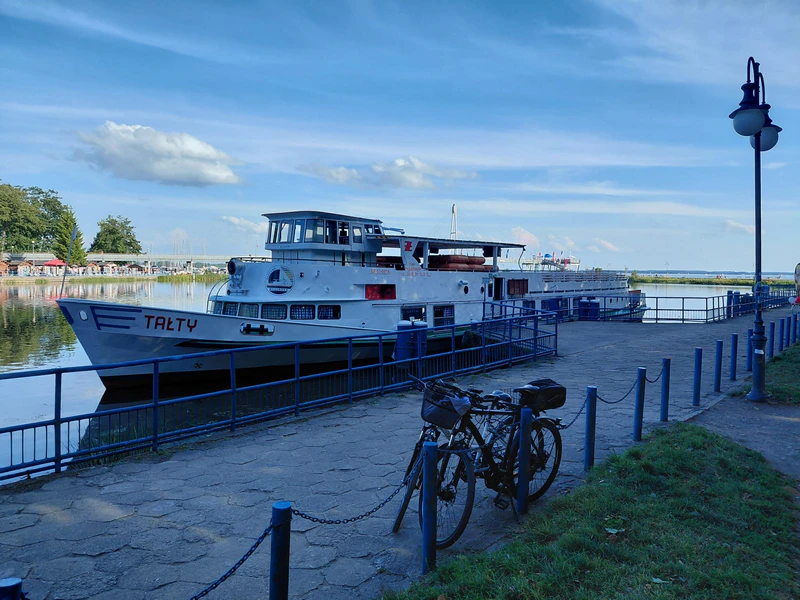
Right beside the beach is the Żegluga Mazurska passenger harbour, from which excursion boats depart during the season, travelling across the surrounding lakes and heading north towards Węgorzewo. Vessels of various sizes are moored along the quayside, and groups of tourists waiting to board their cruises appear among the people strolling along the waterfront. A little further on are marinas filled with yachts and sailing boats, giving this part of town its particular character. I must admit that I could spend hours watching harbour life. I know from experience just how fascinating it can be. I enjoy observing preparations for departure, mooring manoeuvres, sailors busying themselves on deck and those who can finally relax after a whole day on the water. There is something both familiar and rather special about it all. Harbours have their own rhythm, sounds and smells. Even when nothing much is happening, I find it difficult to walk past without stopping.
A natural extension of the beach is Giżycko’s pier, which certainly stands out from similar structures in other Masurian towns. Rather than a simple, straight jetty stretching out into the lake, it is a broad promenade with a distinctive shape that allows you to admire Lake Niegocin from different angles. Walking along it, you can enjoy the panorama of the town, watch sailing boats heading out onto the lake or simply stop at the railing and gaze at the water. In the August sunshine, the view was particularly picturesque. The blue of the sky almost merged with the surface of the lake, punctuated by the white sails that are such a characteristic feature of the scenery. I felt that this was perhaps the best place to experience Giżycko’s summer atmosphere. There was no need to visit any attractions, buy tickets or plan the next stop on a sightseeing itinerary. It is an ideal spot to sit on a bench, watch the lake, lose yourself in thought or read a book. I regretted not having enough time for such simple pleasures on this occasion.
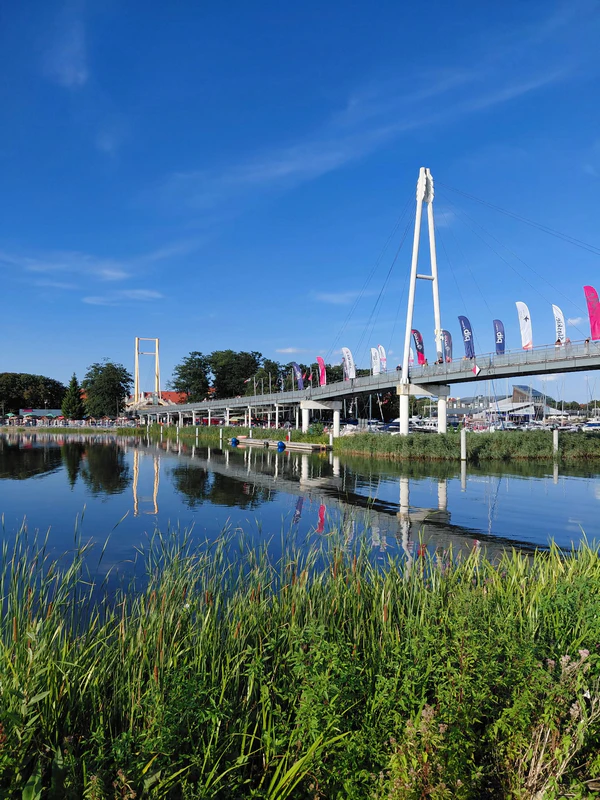
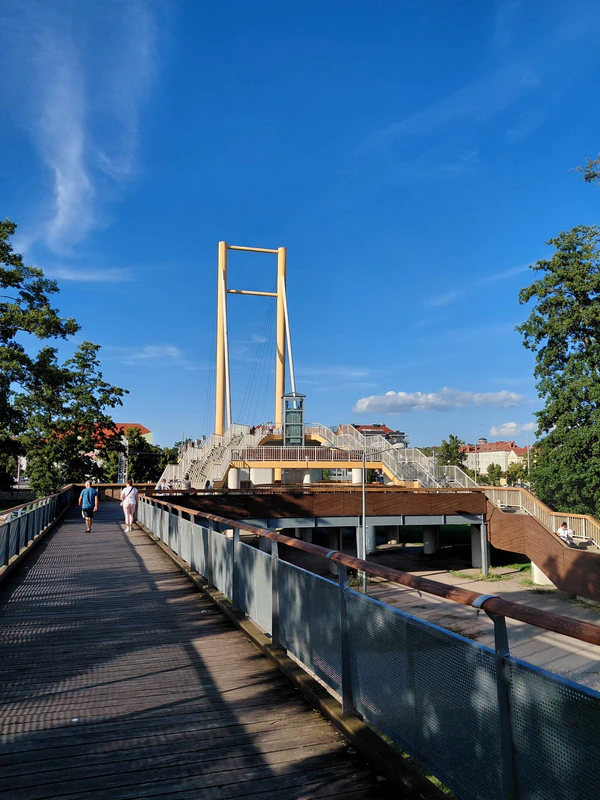
Another interesting feature of this part of Giżycko is the pedestrian footbridge spanning the railway tracks. It connects the town centre with the recreational areas beside Lake Niegocin, providing a safe crossing over the railway line that separates the centre from the waterfront. The bridge itself is contemporary in design and could hardly be described as a historic monument or an architectural attraction of particular merit. Yet it is more than just a practical crossing. From its elevated position, you can see the surrounding area from a slightly different perspective, catching glimpses of the harbour, the lake and the town’s buildings. I like viewpoints like this, even when they are not especially spectacular. They offer a chance to rise above street level for a moment and get a better sense of the layout of a place.
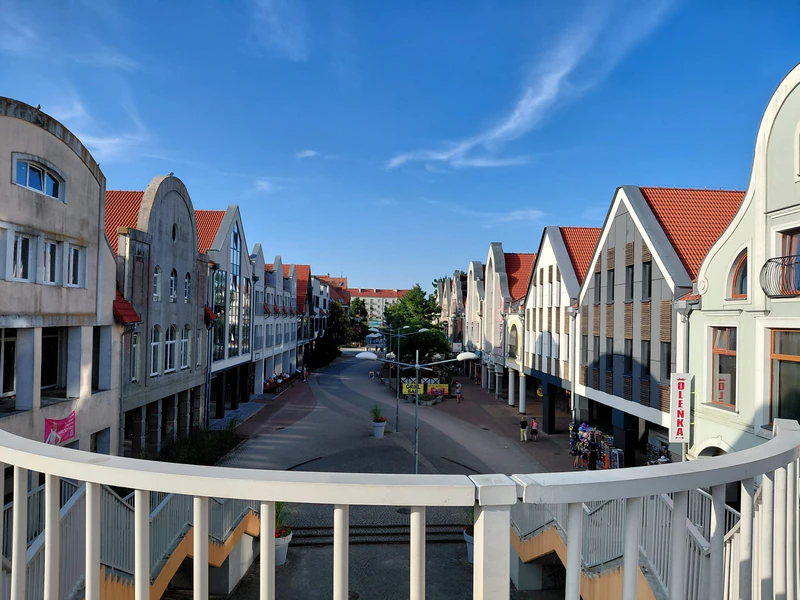
After crossing the footbridge over the railway tracks, we arrived at a square that forms part of a relatively new urban space. Known as Nowy Rynek, or New Market Square, it struck me as rather different from the traditional Masurian market squares I associate with old townhouses, small green spaces and historic town halls. Here, contemporary buildings, open space and cafés and restaurants dominate, attracting both tourists and locals during the summer season. There is not much historic charm to the place, but it certainly has a holiday atmosphere. I had the impression that it was designed primarily as somewhere to meet, relax and spend time without rushing. Importantly, not just for tourists, but above all for the people who live here outside the holiday season. Sometimes, when visiting popular holiday destinations, I get the feeling that their public spaces have been designed almost entirely around the needs of visitors. That makes me appreciate places like this all the more, places that remain part of everyday life throughout the year.
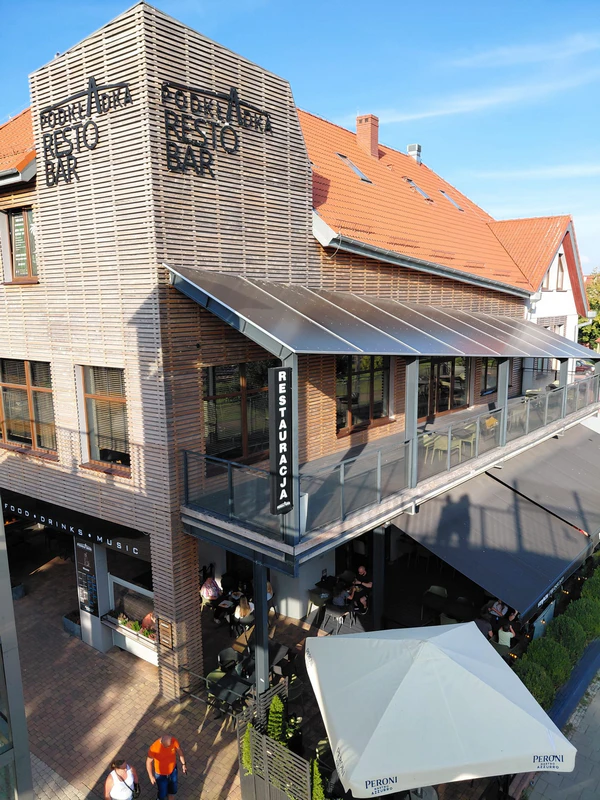
Just after coming off the footbridge, at the beginning of Nowy Rynek, is PodKładka Resto Bar, whose name is a playful reference to the nearby railway footbridge. It had been recommended to us by the taxi driver.
PodKładka fits perfectly into the relaxed, modern character of this part of town. It is not somewhere that tries to pass itself off as an elegant restaurant with grand ambitions. It is much closer to a casual holiday bar, where you can stop for something to eat or drink, rest after a walk and spend a little time watching what is going on around you. The menu is rather eclectic – fusion cuisine through and through. The food, however, was pretty tasty and reasonably priced. It was just a pity that the upper level was closed to customers, as its terrace overlooks the lake. Downstairs, I had to make do with the less appealing view of Kolejowa Street and the railway tracks. Still, I can’t really complain. It was a pleasant place to spend some time, and after several hours of walking in the August sunshine, the chance to rest and enjoy a good meal more than made up for the lack of a view of Lake Niegocin.
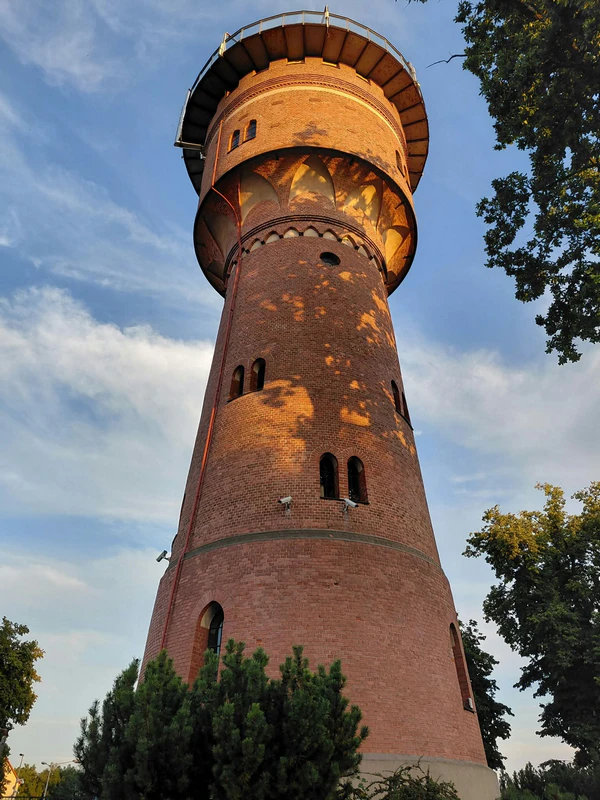
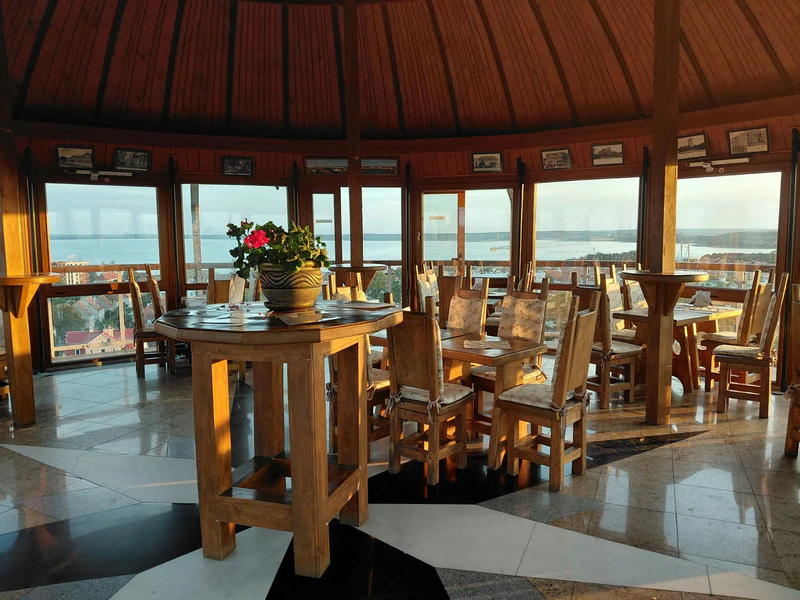
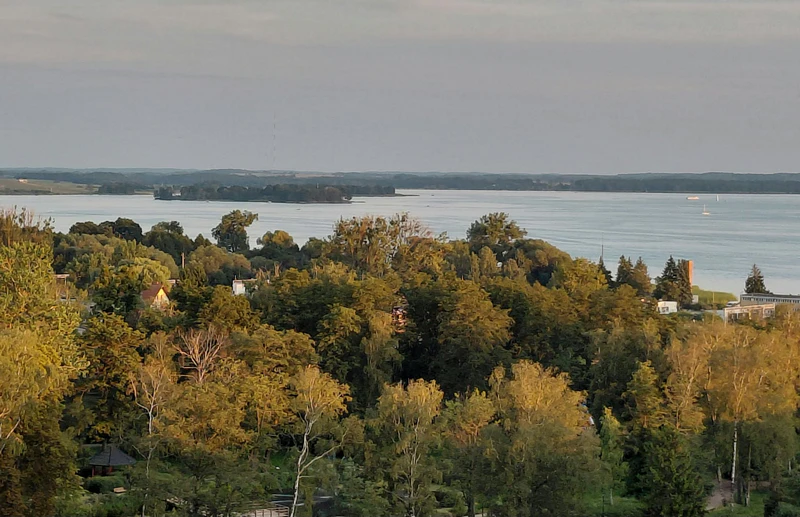
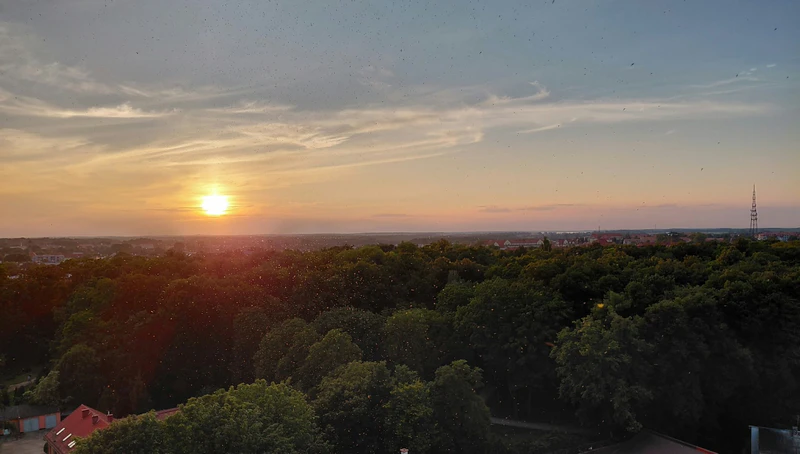
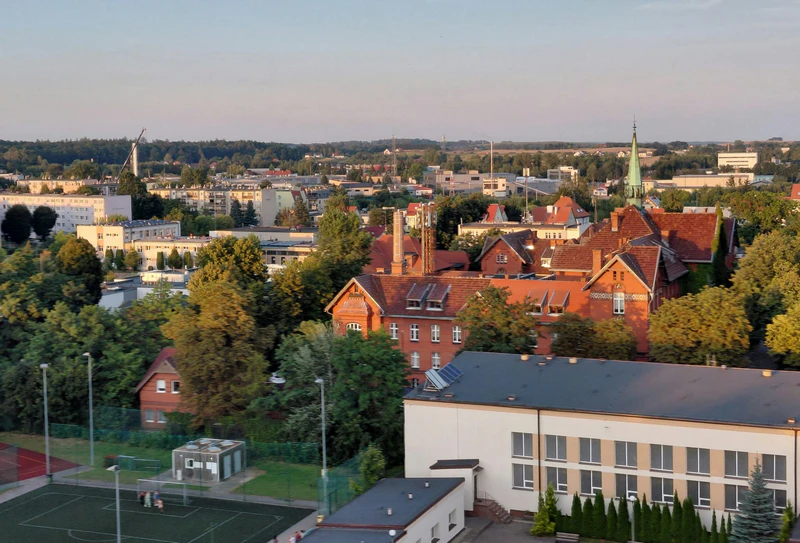
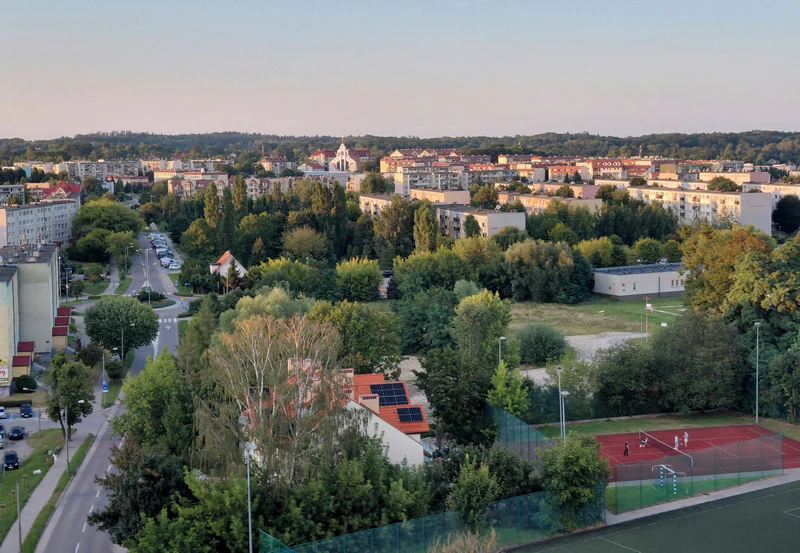
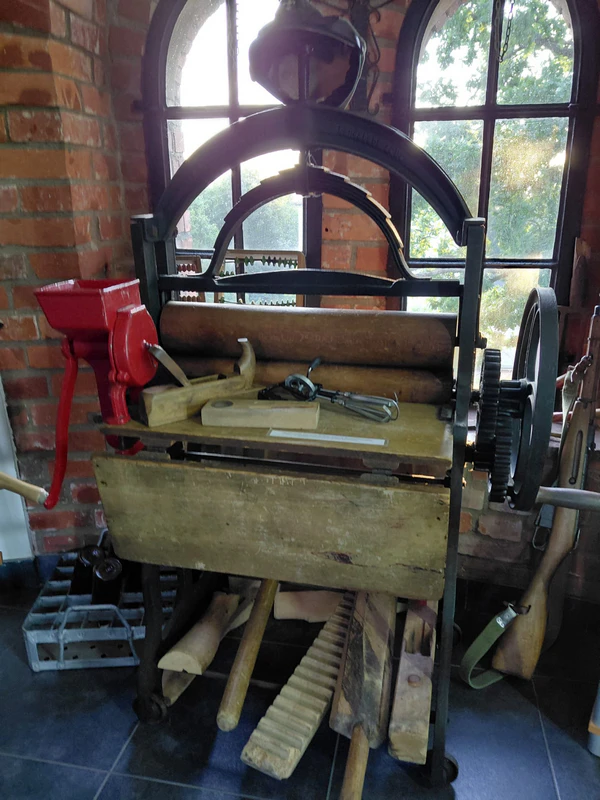
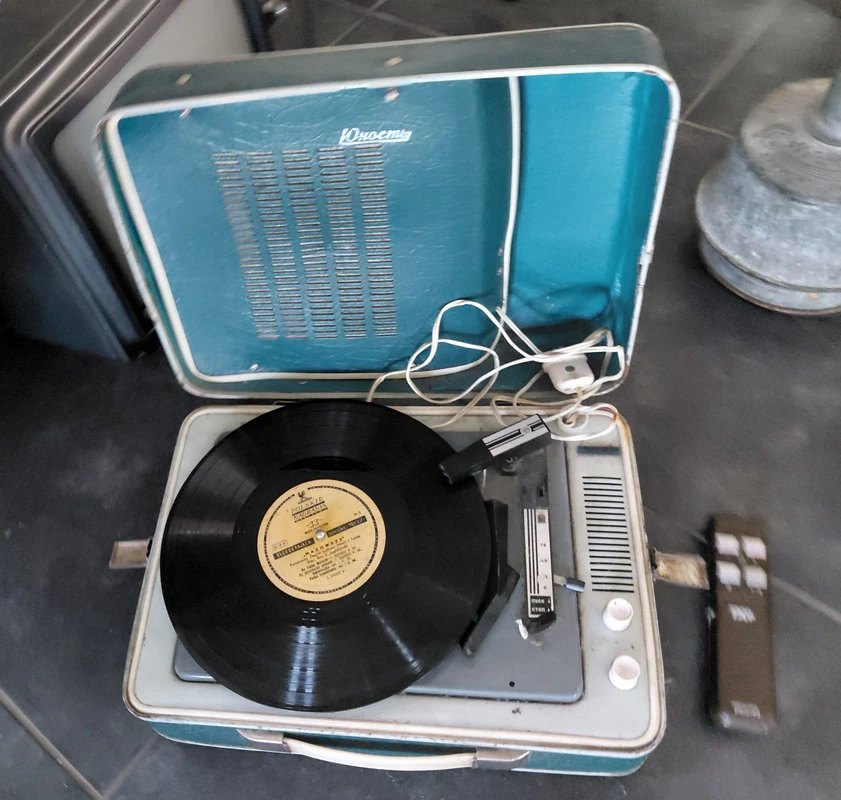
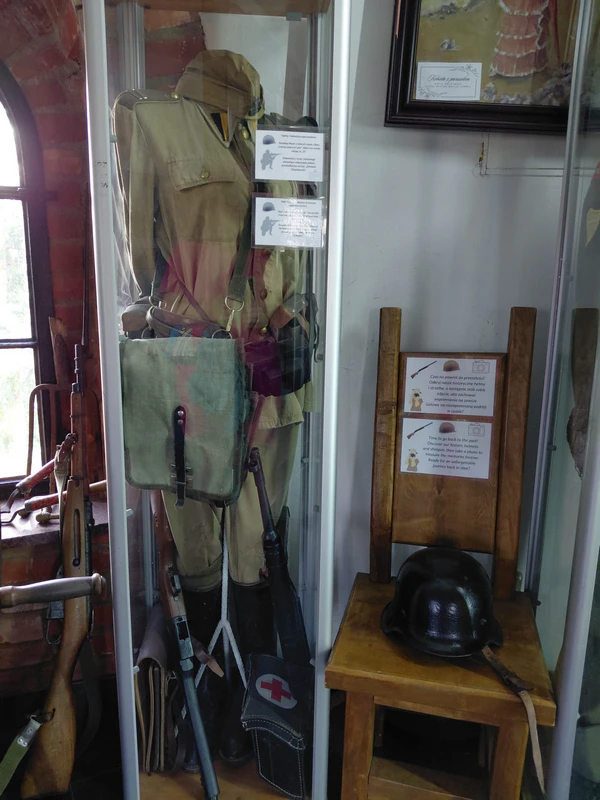
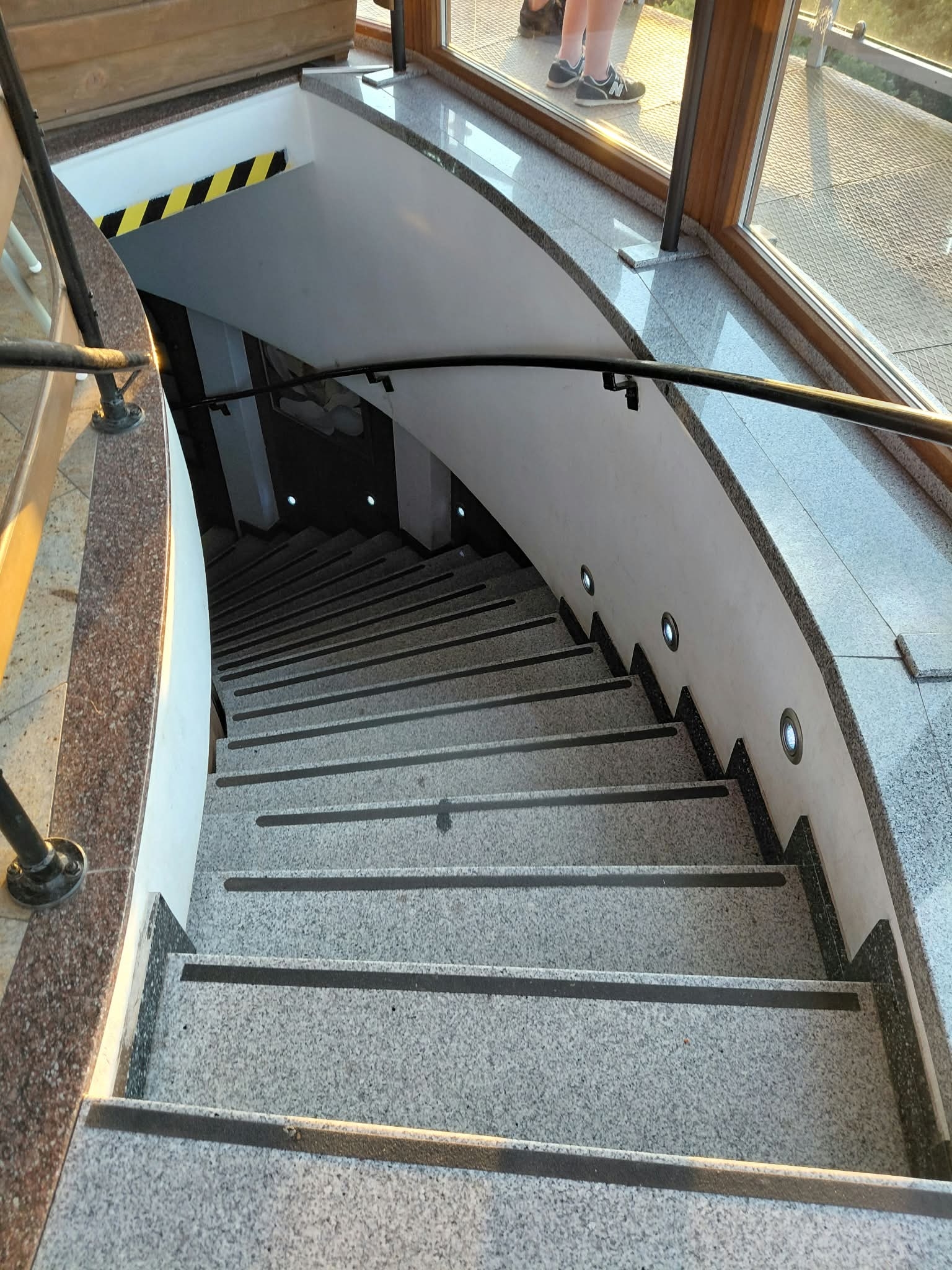
From Nowy Rynek, we made our way to Warszawska Street, where my attention was caught by the Water Tower rising above the surrounding buildings. It is a reminder of an era when even purely functional structures were designed with a degree of elegance. Built in 1900 in the Neo-Gothic style, it served the town’s residents as part of the municipal water supply system for almost a century. Today, it has an entirely different purpose – it is an observation tower. It also houses a small museum containing memorabilia of the town’s former inhabitants. Places like this usually interest me a great deal. I enjoy looking at old photographs and everyday objects that help me imagine, even just a little, what life was like for the people who lived here in the past. This time, however, we arrived shortly before closing, so there was no opportunity to examine the exhibits properly. Instead, I turned my attention to the views. Only from up here could I fully appreciate the town’s position between Lakes Niegocin and Kisajno. From this perspective, the town’s buildings seemed almost to disappear among the greenery, while the lakes dominated the view. I thought then that I could hardly have chosen a better place to end our walk. All the more so because you can enjoy a delicious coffee in the café at the top of the tower and spend a little longer admiring the panorama of Giżycko. My visit to Giżycko ended with a descent from the top of the tower – down 129 steps of a winding staircase.
How Did Giżycko Get Its Name?
As I made my way down the stairs, I began wondering about the origins of the name Giżycko. I knew that before the war the town had been known by its German name, Lötzen, and that for a short time after the war it had been called Łuczany. What I didn’t know was why it had eventually become Giżycko. It turns out that there is quite an interesting story behind the name, one connected with Masurian identity, the defence of the Polish language and decisions made by post-war officials.
The man commemorated in the town’s name is Gustaw Gizewiusz (1810–1848), a Protestant pastor and social activist who campaigned to defend the Polish language in Masuria during the 19th century. He was born in Pisz, studied in Ełk and spent most of his adult life in Ostróda, where he worked as a preacher. He therefore had no particularly close connection with Giżycko itself. So why was the town named after him? Gizewiusz came from a noble family of Polish origin that bore the Gozdawa coat of arms. According to historical studies, his ancestors came from Giżyce, near Sochaczew in Mazovia. In the 16th century, some members of the Giżycki family moved to the Duchy of Prussia, where they received grants of land. Over time, some of their descendants began using the surname Gisevius, the Polish form of which is Gizewiusz. Interestingly, Gustaw Gizewiusz himself used the Gozdawa coat of arms, including on his seal and bookplate. At a time when the Germanisation of East Prussia was intensifying, he was among those who openly defended the Polish language, which was spoken by a large proportion of the Masurian population. He campaigned to preserve Polish in schools and churches, published works in Polish and collected Masurian folk songs. He believed that language was an important part of the identity of the people living in this region. He died in 1848, just short of his 38th birthday.
For centuries, Giżycko was known by its German name, Lötzen. There was also a Polish version of the name – Lec. After the end of the Second World War, when Masuria became part of Poland, the name Łuczany began to be used. It caught on among the town’s new residents, and for a while it seemed likely to become permanent. Things turned out differently, however. In 1946, the Commission for the Determination of Place Names decided that the town should be called Giżycko, in honour of Gustaw Gizewiusz and his Polish roots. Łuczany was considered too closely associated with the old German name. Interestingly, not everyone welcomed the decision. Residents who had already grown accustomed to Łuczany lodged an official protest against the change. The commission, however, refused to back down and upheld its decision. For a time, both names continued to be used, and Łuczany remained in circulation for many years. Traces of it can still be found today in the name of the Łuczański Canal, where the swing bridge stands.
I don’t usually spend much time thinking about the names of the places I visit. I tend to take them for granted, as though they have always existed. Yet the name Giżycko is relatively recent and did not emerge from local tradition. Instead, it was imposed by an official decision. It was intended to commemorate a man who fought to preserve the language and culture of the Masurians, even though his own connection with the town on Lake Niegocin was only indirect. There is something rather paradoxical about that. But it is also a good example of just how complicated Masuria’s history can be, in a region where different languages, cultures and national identities have overlapped and intertwined for centuries.
One busy August afternoon was certainly not enough to discover all the different sides of Giżycko. I didn’t manage to explore every corner that interested me, or find out what the town is like early in the morning, before the first tourists appear on the streets, or in the evening and at night, when the bars and restaurants really come to life. Nor did I get to visit Boyen Fortress, which I have left for another time. But I have no regrets. I don’t enjoy sightseeing in a rush, ticking attractions off a list one after another. What matters much more to me is getting a feel for a place, even if that means missing a few of the supposedly essential sights. What I liked about Giżycko was its easy-going atmosphere, its closeness to the water and the fact that it didn’t try too hard to impress tourists. Of course, it is not entirely free from the attractions typical of holiday resorts, such as the souvenir stalls around the harbour, but I never felt that they had completely taken over the town. There are still quieter corners to be found, places where you can sit beside the water and forget about the world around you for a while. And for me, that is a considerable advantage.
By the time we got into the taxi taking us back to the marina in Piękna Góra, I was already convinced that I would happily return to Giżycko. Partly to see the places I hadn’t had time for on this visit, but also simply to sit beside Lake Niegocin and watch the water and the sailing boats. Because these are the moments that give me the greatest pleasure and stay with me the longest.
August 2026