Echoes of Modernism: The Unexpected Beauty of Giżycko's Fala Cinema
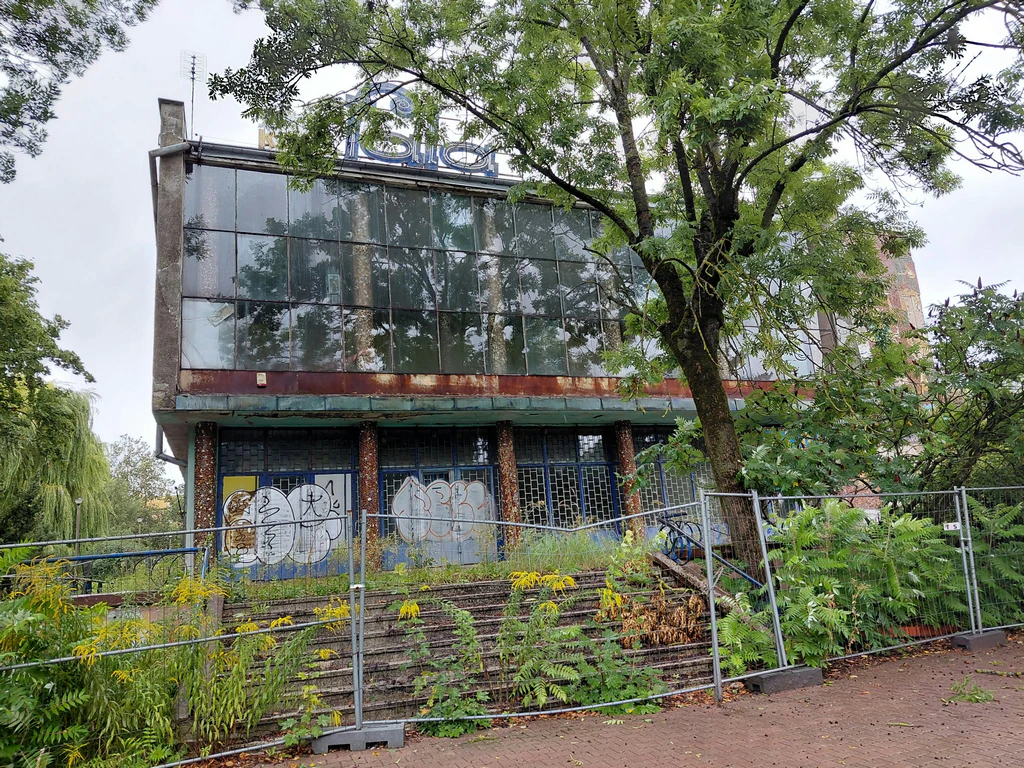
The old Fala Cinema at 2 Plac Grunwaldzki in Giżycko caught my eye as I was leaving Prosto z Młynka, a lovely little place where I’d stopped for breakfast. At first glance, it looked like a derelict building waiting for a property developer to come along and knock it down. The site was surrounded by wire fencing, and the front was so overgrown that very few of its architectural details were visible. Yet, despite all that, I was intrigued by the building’s shape, its glazed frontage, the old neon sign and the ceramic mosaic.
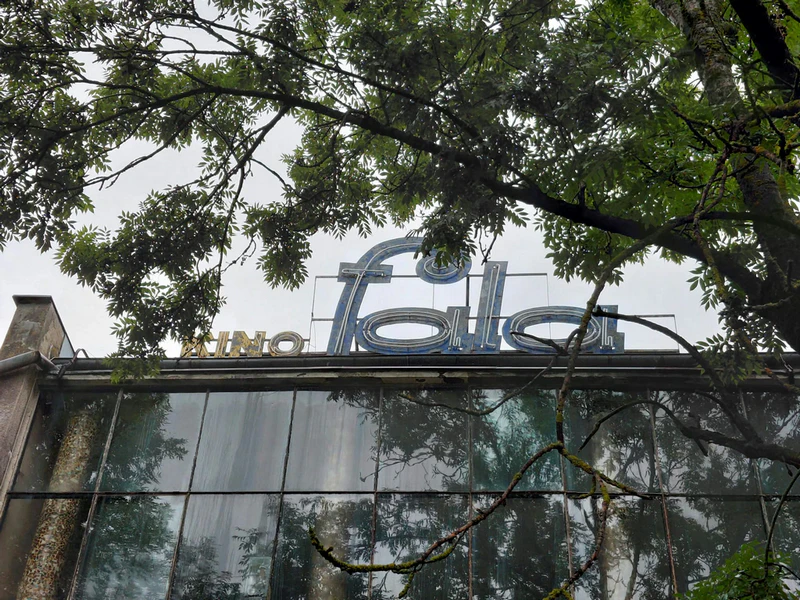
The cinema dates back to the years before the Second World War, when the town still bore its East Prussian name, Lötzen, which Polish-speaking residents adapted to Łuczany. The auditorium is apparently the only part of the original cinema still standing. After the war, the cinema was rebuilt thanks to the efforts of Simonowicz, an electromechanical technician who had arrived from Białystok. It reopened in 1946 under the name Wanda Cinema, named after the woman he loved. By then, the town had officially become Giżycko. In the 1960s, the cinema underwent a major modernisation. A two-storey foyer was added to the front of the existing building, designed in the style of post-war modernism, with an entirely glazed front wall. A neon sign displaying the cinema’s new name, FALA — Polish for ‘wave’ — was installed high up on the left-hand side of the façade. The right-hand side was decorated with a ceramic mosaic, which also covered the columns at the front and other architectural details. The refurbished cinema continued operating under its new name. In the 1970s, garages were added to the rear of the building. The final screening took place in 2009. The deteriorating building was saved from demolition thanks to the efforts of the regional heritage conservation authorities. There are now plans to restore and repurpose it as Giżycko’s Centre of Generations. An architectural practice in Pabianice is drawing up plans to adapt the former cinema for its new role.
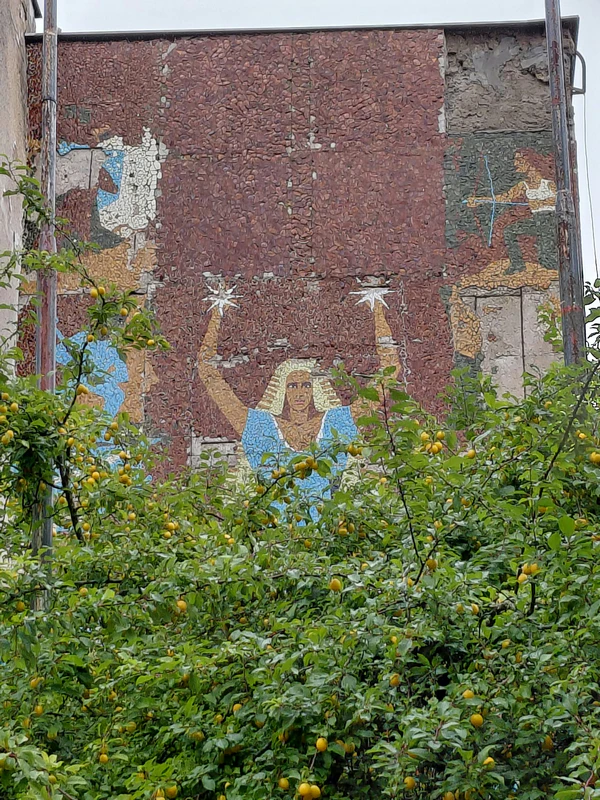
What stayed with me most, though, were the neon sign and the ceramic mosaic. I was particularly taken with the lettering on the FALA sign. There’s something wonderfully elegant about it. The mosaic is largely hidden by the foliage of a tree growing in front of the building. From a distance, its composition reminded me of ancient Egyptian depictions of the heavens and the zodiac. And it turned out my first impression had been right. The mosaic on the right-hand side of the façade does indeed depict the signs of the zodiac. Its palette of earthy colours seems to echo the natural tones of the surrounding landscape and vegetation. Sadly, the artist who created it remains unknown.
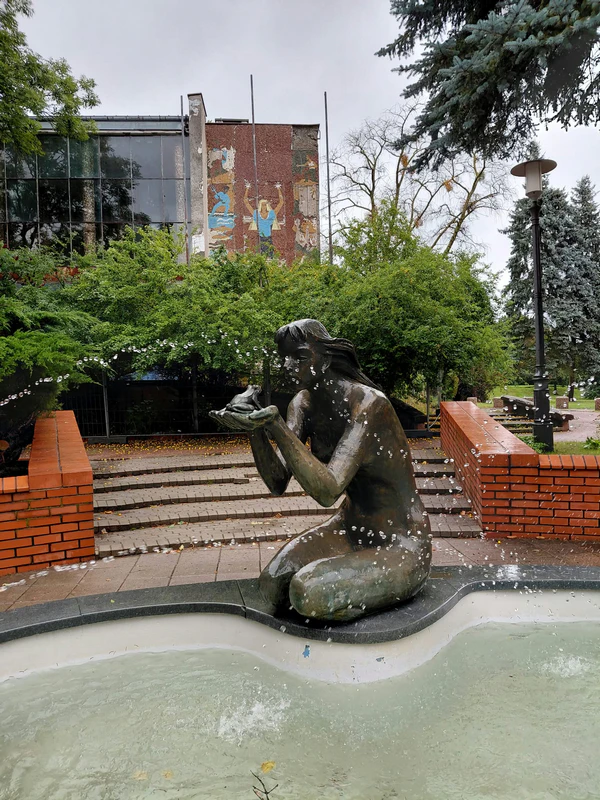
If you go to see the old Fala Cinema, it’s also worth taking a look at the fountain in nearby Plac Grunwaldzki. At its centre stands a bronze sculpture of a young, naked woman tenderly holding a frog in her hands. It refers to a local legend about the tragic love between Galinda, the daughter of a wealthy fisherman who lived on an island in Lake Niegocin, and Gardomir, a poor young man from the mainland. The sculpture was created by local artist Andrzej Morawski and has stood in Plac Grunwaldzki since 2001.
August 2026