The Accidental Discovery: Retracing the Cultural Threads of Pietro Citati’s Essays
This book arrived in our home by pure chance, having been withdrawn from circulation by a university library. The title immediately caught our eye, so we rescued it. Once I started reading, I simply couldn’t put it down. It completely fascinated me, sparked endless reflection, and even inspired me to retrace some of its footsteps through the streets of Paris.
Pietro Citati (1930–2022) was one of Italy’s most renowned literary critics and masters of the essay form. His work closely interrogated the giants of world literature, offering profound studies into the lives and legacies of figures like Johann Wolfgang von Goethe, Franz Kafka, and Marcel Proust, alongside captivating historical portraits, most notably of Alexander the Great. For decades, he was also a close friend and contemporary of Italo Calvino.
Israel and Islam is a collection of essays that marks a distinct pivot in Citati’s oeuvre, turning towards cultural and religious reflections on the shared roots of Judaism and Islam. His ambition was to offer a symbolic reconciliation between the two by highlighting the profound cultural threads that bind them. Along the way, he charts the historical origins of European antisemitism and examines the complex concept of the chosen people.
I devoured these essays with immense interest. The book is incredibly rich, offering countless points of departure for further study. Masterfully written, these pieces helped me grasp, observe, and discover so much about the delicate intersections between the three major monotheistic religions—Judaism, Christianity, and Islam. Within its pages, Citati attempts to answer deep, multifaceted questions: why the Jewish Pharisee, Josephus, ultimately became a supporter of Emperor Titus Flavius; where the extraordinary resilience and survival of the Jewish diaspora stem from; how the Jewish religion transformed over time; and why mysticism both fascinates the faithful and is condemned as blasphemy. He explores why the diaspora still awaits the Messiah, and what drives their immense intellectual achievements. I was also deeply struck by the vividly drawn, evocative essays dedicated to Simone Weil, Joseph Roth, Hannah Arendt, and Bruno Schulz.
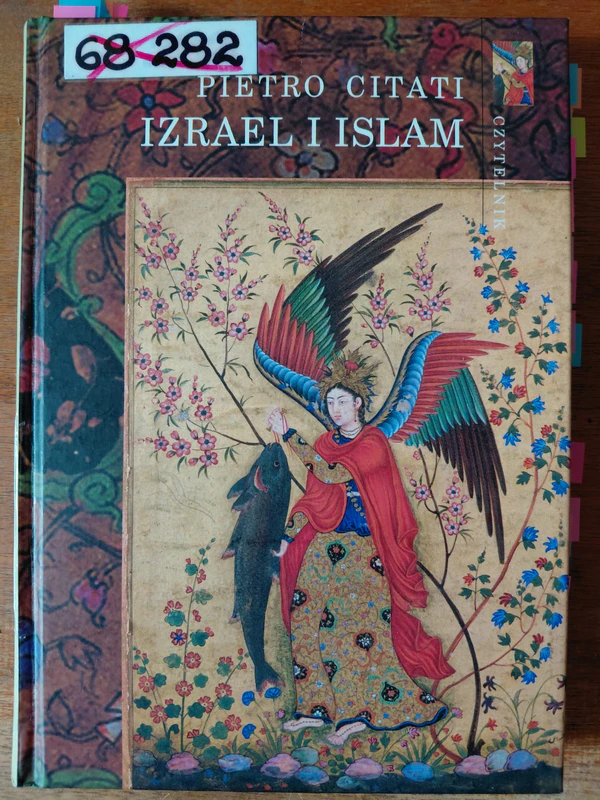
Equally fascinating is Citati’s account of how the figure of the angel evolved in Persian miniatures. He maps the iconographic divide between European painting and Islamic art, highlighting the crucial historical contacts between Europe and Asia that fueled mutual fascination and artistic borrowing. He reminds us that biblical stories were well known far beyond the borders of our European universe. The Old Testament narrative of Tobias and the fish stayed with me in particular. Introduced by the Portuguese to the courts of Muslim rulers, this story was creatively adapted and absorbed into the iconographic repertoire of Muslim miniaturists. In fact, one of these breathtaking depictions graces the book’s cover, and the author dedicates a beautifully crafted essay to it.
I cannot recommend this book highly enough. It helped me form a much clearer, more structured understanding of these complex issues within their broader cultural, religious, and historical contexts. I also owe it to Citati for inspiring me to visit certain corners of Paris, including Café Le Tournon—once a favorite workspace and gathering place for Joseph Roth, which still welcomes patrons today.
September 2026