Echoes of Modernism: The Haunting Beauty of Giżycko’s FALA Cinema
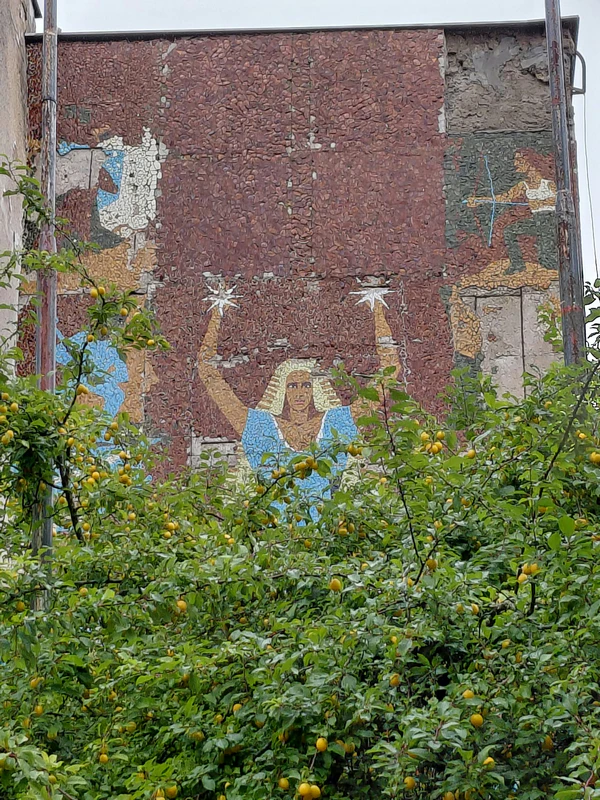
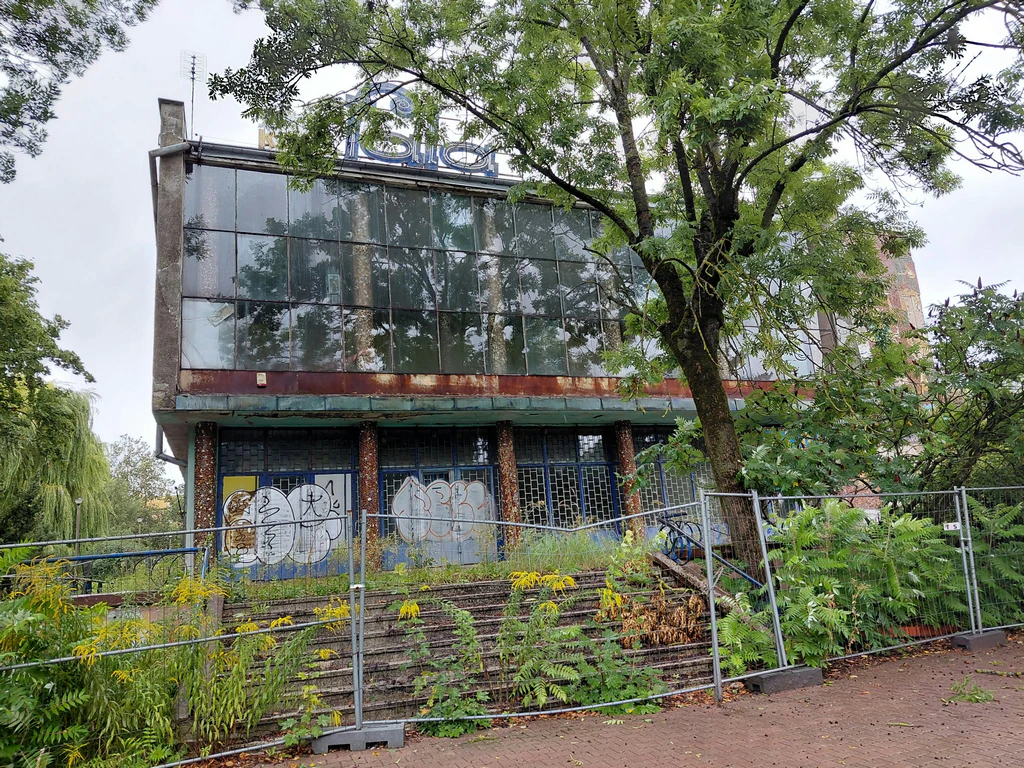
I stumbled upon the FALA Cinema quite by accident. I had just stepped out of PROSTO Z MŁYNKA , a delightful local breakfast spot at 2 Plac Grunwaldzki in Giżycko, when the building caught my eye. At first glance, you’d be forgiven for thinking it was just a derelict ruin, seemingly destined for the developer’s wrecking ball. The entire site is sealed off by a wire fence, and the front has become so wildly overgrown that the structure is half-swallowed by nature. Yet, despite the neglect, I found myself utterly captivated by its shape—the sweeping glass facade, a vintage neon sign, and a fading ceramic mosaic.
The cinema’s roots stretch back to the pre-WWII era, when the town was still the Prussian Lötzen (often referred to by locals as Łuczany ). Local lore suggests that only the original auditorium survived the war. In 1946, as the town was officially renamed Giżycko, the cinema was rebuilt by an electromechanical technician named Simonowicz, who had arrived from Białystok. In a wonderfully romantic gesture, he named it the WANDA Cinema , a tribute to his sweetheart.
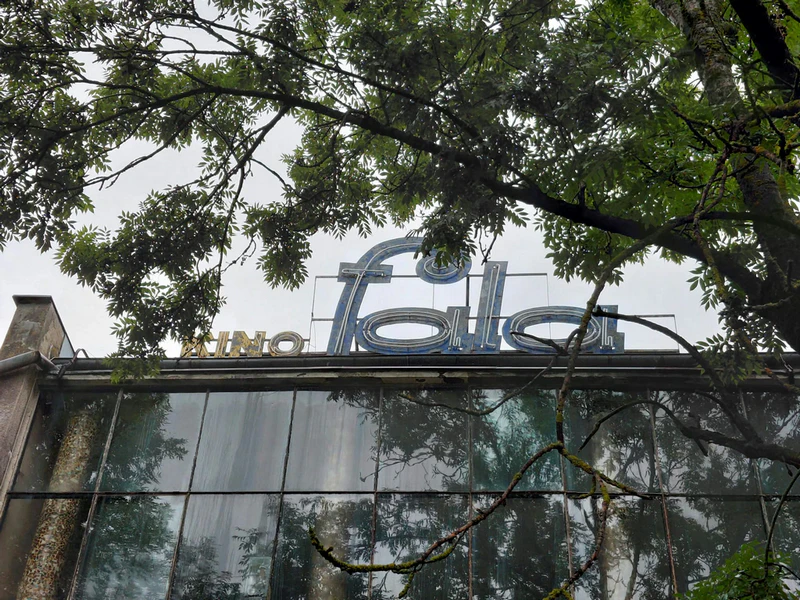
The building underwent a striking modernist transformation in the 1960s. A two-story foyer was added to the front, creating a beautiful example of post-war Polish modernism characterized by a fully glazed front. High up on the left, a glowing neon sign proudly displayed its new name: FALA (Wave). Meanwhile, the right side was adorned with a vibrant ceramic mosaic that wrapped around the front columns and structural details. After a final layer of expansion in the 1970s, the curtain came down for the last time in 2009. The decaying landmark narrowly escaped demolition thanks to a campaign by the regional heritage protection office. Today, things are looking up: plans are underway to resurrect the building as the Giżycko Center of Generations , with an architectural studio from Pabianice currently drawing up the redesign.
What really stayed with me, though, were the neon sign and the mosaic. The typography of the FALA sign is beautifully elegant. The mosaic, meanwhile, is now largely hidden behind the canopy of a tree; from a distance, its patterns instantly reminded me of ancient Egyptian depictions of the night sky and the zodiac. As it turns out, my intuition was spot on. The artwork does indeed depict the signs of the zodiac, rendered in warm, earthy tones that beautifully complement the surrounding landscape—though the identity of the artist remains a mystery.
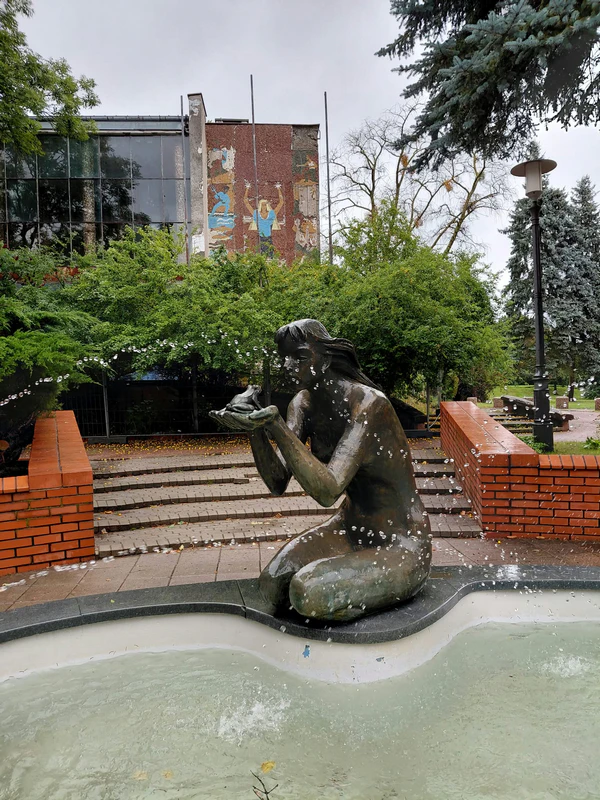
If you do make the trip to see the FALA Cinema, it’s well worth taking a moment to look at the fountain in the nearby square, Plac Grunwaldzki. It features a bronze sculpture of a young, nude woman tenderly cradling a frog. The piece nods to a tragic local legend about the love between Galinda, the daughter of a wealthy fisherman from an island on Lake Niegocin, and Gardomir, a poor youth from the mainland. Created by local artist Andrzej Morawski, the sculpture has watched over the square since 2001.
August 2026